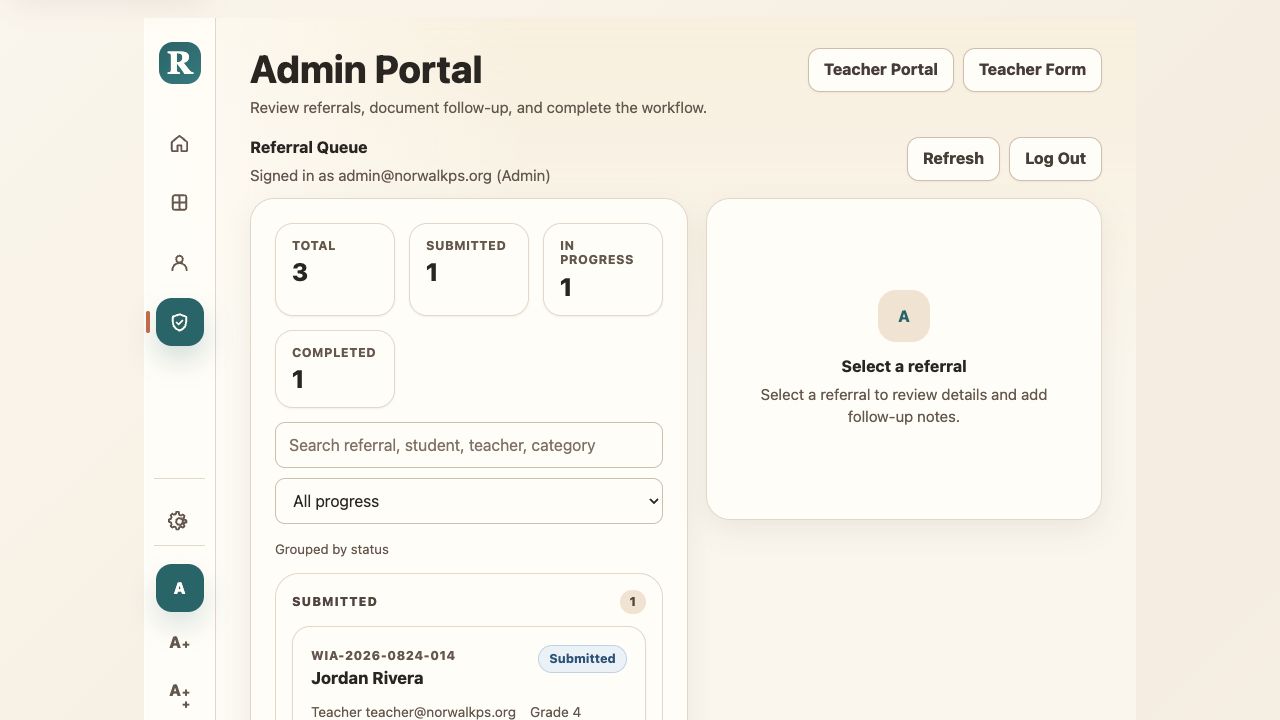
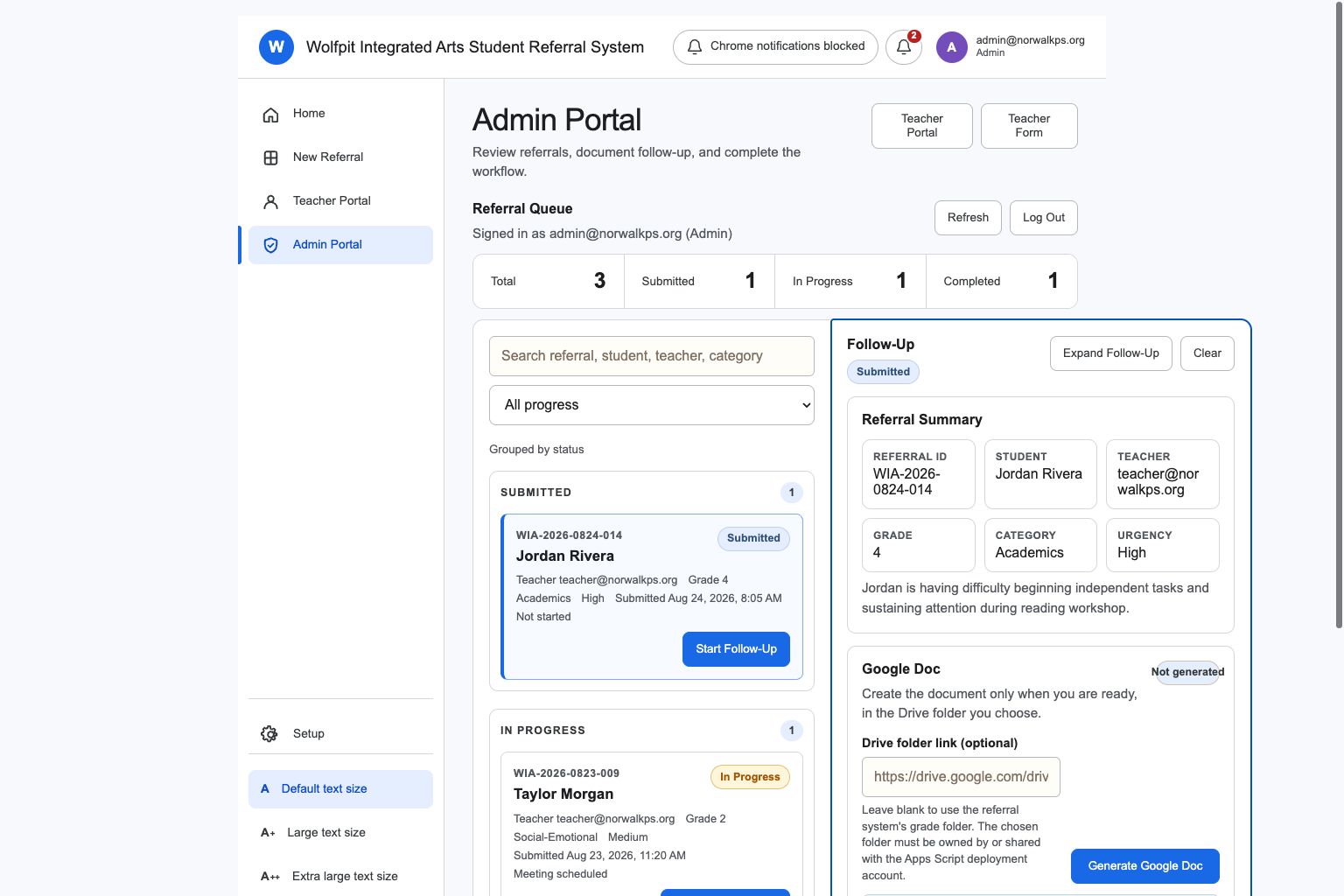
The problem
The original referral form was long and slow, and administrators had no clear queue for follow-up. It had to stay on Google Apps Script (district constraint) and be rebuilt without disrupting a live system that staff rely on daily.
How I directed the agents
Codex planned the phases, and Claude Code implemented them. The key artifact was an 866-line handoff document written so any fresh agent session could pick up exactly where the last left off, with the constraints stated as hard rules:
"It must stay Apps Script… Do not propose moving it… even in passing."
Each phase had a scope, acceptance checks and a commit, which produced 41 commits from Phase 0 to go-live between late August and September 2026.
The false-pass catch
One automated check comparing old and new behavior reported:
WEAK PASS: agreed on all 0 sample(s)
It "passed" because there was nothing to compare. I had the check reclassify zero-sample results as INCONCLUSIVE, so an empty test could never look like a success again.
Measured results
- Required form fields cut from 11 to 6, with 22 optional fields moved behind a disclosure
- Teacher page payload cut from 335 KB to 217 KB
- WCAG AA contrast: a specified text color at 4.28:1 darkened to pass 4.5:1
- Verified no horizontal overflow at 375px across all 7 views
Staff enablement
- 794-line operator setup guide and deployment notes
- Two PDF user guides for teachers and administrators
- A newsletter for the principal to introduce the new system to staff
What this shows for AI training roles
- Writing persistent instructions and constraints that keep agents on track across sessions
- Catching vacuous or misleading evaluation results
- Setting phase-by-phase acceptance criteria and holding AI output to them
- Shipping to real users, then training them